

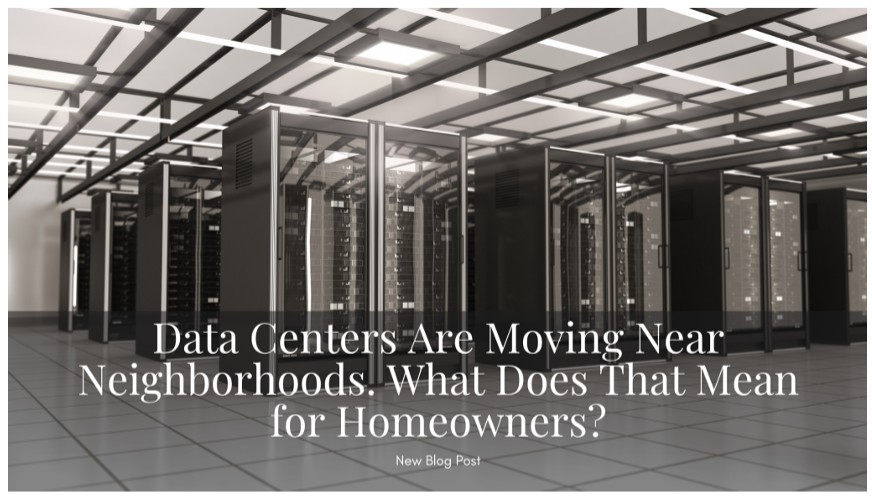
Data Centers Are Moving Closer to Neighborhoods: Could They Affect Your Home's Value?
As data centers expand across Oregon and the country, homeowners are asking an important question: What could a nearby data center mean for my property value and neighborhood?
With the rapid growth of artificial intelligence (AI), cloud computing, and digital technology, demand for large data centers continues to increase. These facilities provide the infrastructure that supports everything from online banking and streaming services to the growing use of AI.
But as data centers become part of more development discussions, homeowners are raising questions about noise, electricity costs, water usage, traffic, and potential effects on property values.
For homeowners throughout Clackamas and Multnomah counties, including Sandy, Estacada, Gresham, Troutdale, Fairview, and the Mt. Hood corridor, understanding how nearby development may affect residential real estate is an important part of protecting your investment.
So, should homeowners be concerned?
The answer depends on the specific facility, its location, and how it fits into the surrounding community.
Will a Nearby Data Center Lower Your Property Value?
One of the biggest questions homeowners have is whether living near a data center could make their home less desirable to future buyers.
Research suggests there isn't a simple yes-or-no answer.
A Realtor.com analysis of large data centers that opened between 2019 and 2025 found that nearby home prices generally followed trends similar to comparable neighborhoods during the first two years after opening.
Research from the National Association of REALTORS® (NAR) has also reported mixed perceptions among real estate professionals about the effects of data centers on nearby residential property values.
However, every neighborhood and property is different.
A home directly bordering a large industrial facility may be viewed differently by potential buyers than a home located several miles away.
Factors such as noise, traffic, visibility, landscaping, and overall neighborhood character may influence buyer interest.
The bottom line is that a nearby data center does not automatically mean your home will lose value, but understanding the potential impact is important.
Five Things Homeowners Should Consider
1. Location Makes a Difference
When it comes to real estate, location has always been one of the biggest factors influencing property values.
A data center located within an established industrial area may have little noticeable impact on nearby residential neighborhoods. However, a large facility constructed immediately next to existing homes could raise different concerns.
Before drawing conclusions, homeowners should ask:
-
How close will the facility be to residential properties?
-
Will the buildings or equipment be visible from nearby homes?
-
Are there plans for future expansion?
-
What roads will construction vehicles use?
-
Will landscaping, trees, or other buffers separate the facility from surrounding homes?
Reviewing proposed site plans and local planning documents can provide valuable insight into how the development may affect the area.
2. Noise Could Affect Neighborhood Appeal
Unlike many traditional commercial buildings, data centers typically operate 24 hours a day.
Cooling systems, ventilation equipment, and backup generators can produce noise, depending on the facility's design.
For homeowners, the important question isn't simply whether a data center is nearby, but whether the noise can actually be heard from their property.
If you're considering buying a home near an existing data center, visiting the neighborhood at different times of day may help you understand the surrounding environment.
For proposed facilities, reviewing equipment placement, sound barriers, setbacks, and local noise regulations can help answer important questions.
3. Could Your Electricity Bill Increase?
Data centers can require substantial amounts of electricity to power their servers and cooling equipment.
As demand increases, homeowners may wonder whether additional energy consumption could eventually affect residential utility rates.
Energy costs were among the most frequently reported concerns in NAR's 2026 research on data center development.
However, a new data center does not automatically mean higher electricity bills for nearby residents.
The potential impact depends on utility providers, infrastructure improvements, regulatory decisions, and how the costs of serving the facility are allocated.
For homeowners in Clackamas and Multnomah counties, understanding proposed utility infrastructure projects and potential rate changes is a good way to stay informed.
4. Water Usage Is Worth Understanding
Some data centers use water-based cooling systems, while others rely on technologies designed to reduce water consumption.
The amount of water required can vary significantly depending on the facility.
For communities where water resources and infrastructure capacity are important considerations, residents may want to learn more about:
-
Where the facility will obtain its water
-
How much water it expects to use
-
Whether conservation or water-reuse systems are planned
-
Whether additional water infrastructure will be necessary
These questions can help homeowners better understand the potential long-term impact on local resources.
5. Construction and Traffic Can Affect Daily Life
Large data center developments may require significant construction activity, including heavy equipment, truck traffic, road improvements, and utility installation.
Although construction-related disruptions may be temporary, they can affect nearby neighborhoods while the project is underway.
Once completed, some data centers may generate less daily employee traffic than other large commercial developments.
Understanding the construction timeline and long-term operating plans can help homeowners distinguish temporary inconveniences from lasting changes.
Could Data Centers Bring Benefits to Local Communities?
Although much of the discussion focuses on potential concerns, data centers can also bring economic investment to a community.
Depending on the project, potential benefits may include new construction jobs, permanent employment opportunities, increased local tax revenue, infrastructure improvements, and additional business activity.
However, those benefits do not necessarily translate into increased property values for every nearby homeowner.
The overall impact depends on how the development is planned, managed, and integrated into the surrounding community.
What Should Homeowners Do if a Data Center Is Proposed Nearby?
If a data center is proposed near your neighborhood, the best approach is to gather information before making assumptions.
Review local planning and zoning applications, attend public meetings when possible, and ask questions about construction, noise, utilities, and future expansion.
If you're considering selling your home, avoid assuming that a proposed data center will automatically increase or decrease its value.
Instead, look at recent comparable sales, current market conditions, buyer demand, and the specific characteristics of your property.
An experienced local real estate professional can help you evaluate how changes in the surrounding area may influence your home's marketability.
What Does This Mean for Homeowners in Clackamas and Multnomah Counties?
Our local real estate markets include a wide variety of neighborhoods, from established residential communities in Gresham, Troutdale, and Fairview to rural properties throughout Sandy, Estacada, and the Mt. Hood corridor.
Because these areas offer different property types, lot sizes, zoning, and surrounding land uses, the potential impact of any large development can vary considerably.
For example, a rural property valued partly for its privacy and natural surroundings may be affected differently by nearby development than a home located within an established urban neighborhood.
That's why local market knowledge matters.
Understanding how buyers view a particular location, what comparable properties are selling for, and how nearby land uses may change can help homeowners make better-informed decisions.
Final Thoughts: Stay Informed About Changes in Your Neighborhood
Data centers are becoming an increasingly important part of our digital infrastructure, but their effect on surrounding residential communities isn't always straightforward.
Some homeowners may experience little or no noticeable impact, while others may have concerns depending on the location, size, and design of a particular facility.
The most important thing to remember is that real estate values are influenced by many factors, and every property deserves an individual evaluation.
Whether you live in Sandy, Estacada, Gresham, Troutdale, Fairview, the Mt. Hood corridor, or elsewhere in Clackamas or Multnomah County, staying informed about local development is one more way to protect your real estate investment.
Curious About Your Home's Value in Today's Market?
Whether you're concerned about nearby development, considering selling, or simply wondering what your home might be worth, I'm here to help.
With over 23 years of real estate experience serving Clackamas and Multnomah counties, I understand the importance of evaluating each property individually rather than relying solely on broad market trends.
Contact me for a personalized market analysis and a conversation about your real estate goals.